
【KABUKI Miscellany】 Episode 16 : The Colors of Kabuki – Kakiiro / Narrated by Tateo Okido
Hello! We are Asanoha, a tenugui specialty shop located in AzabuJuban, Tokyo.
We’re delighted to share a collection of intriguing stories related to Kabuki. These tales are narrated by Mr. Tateo Okido, an expert in Kabuki and the artist behind the original designs of our Kabuki-themed tenugui. Please enjoy this special series, Kabuki Miscellany, presented by Mr. Okido.
Kabuki Miscellany – Episode 16 :
The Colors of Kabuki – Kakiiro (Persimmon Color)
At the opening ceremony of the Tokyo 2020 Olympics, the world witnessed a striking moment: the 11th-generation Ichikawa Ebizō appeared in the role of Kamakura Gongorō from the kabuki play Shibaraku, collaborating with jazz piano and striking the iconic nirami glare — a gesture passed down through generations of the Ichikawa family — to pray for the Games’ success and an end to the pandemic.
The costume he wore was dyed in kakiiro — persimmon orange — the signature color of the Ichikawa lineage. Kakiiro is so closely tied to the Ichikawa family that, during name-succession ceremonies, the entire Ichikawa troupe wears matching kakiiro kamishimo (formal samurai attire). Even kabuki’s standard jōshikimaku curtain uses three colors: black, moegi green, and kakiiro. In the Edo period, every February featured the kaomise kyōgen (actor lineup plays), where Shibaraku was always performed. In this sense, kakiiro symbolized the authority and tradition of Edo kabuki — a favorite color among the townspeople.
Kakiiro belongs to the broad family of browns. In fact, brown itself originates from cha (tea) — the color produced by boiling tea leaves. Originally just one shade among many, brown became especially popular in the Muromachi period alongside the rise of tea culture, and as the tea ceremony took hold, so did tea-dyed textiles.
In the Edo period, the popularity of brown surged, leading to the coining of the phrase “Shijū-haccha” — literally “48 browns” — referring to the countless variations that were developed. This trend was deeply influenced by kabuki, where actors frequently wore brown tones both onstage and off, further reinforcing the color’s appeal.
Brown tones became signature colors of kabuki houses like Naritaya (Ichikawa family) and Otowaya (Onoe family), and were often tied to specific roles, further solidifying their status as fashion trends throughout the Edo period.
The Actor’s Browns
From the very first Ichikawa Danjūrō onward, a brown known as Danjūrō-cha became associated with the family’s stage costumes — a rich tea color dyed with bengara (iron oxide pigment) and persimmon tannin. It was so widely adopted in fashion and accessories that today’s kakiiro in the standard stage curtain is nearly identical.
Baikō-cha, favored by the first Onoe Kikugorō, is a greenish-brown tone. The name derives from his haimyō (poetic alias), Baikō. It became a beloved color among successive generations of the Otowaya family and enjoyed a period of widespread popularity.
Kabuki actors often practiced haiku poetry and used poetic names, many of which inspired color names. For instance:
– Rikan-cha: a dark brown favored by the second Arashi Kichisaburō
– Shikan-cha: a brighter brown associated with the third Nakamura Utaemon
– Iwai-cha: a clove-dyed shade favored by the fourth Iwai Hanshirō, admired by both men and women
Among all these, Rokō-cha stood out for its lasting influence. Named after the haimyō of Segawa Kikunojō II, a legendary onnagata (female-role specialist), this warm caramel-like tone swept Edo by storm. Young women imitated the costumes and accessories of his roles, leaving behind a record of mass admiration.
Brown, with its associations to the earth, is a universally shared color — yet the names and meanings given to its many shades in Japan reveal the country’s unique sensibility for color. While each era has its own favored tones, brown — particularly in its connection to kabuki — was cherished by the common people of Edo and became a color rich in emotional and cultural weight. In modern times, as Western-style bold and primary colors dominate fashion, brown has taken on the aura of nostalgia — a refined, antique shade that quietly speaks of tradition.
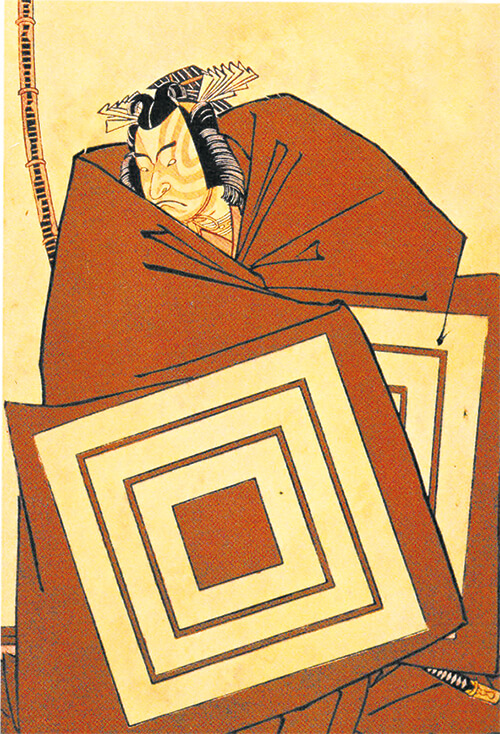
“Shibaraku” – Fifth-generation Ichikawa Danjūrō, by Katsukawa Shunshō (depicted wearing Danjūrō-cha)
Tenugui Related to This “Kabuki Miscellany” Article
」-400x400.jpg "手ぬぐい「暫(大城戸)」")
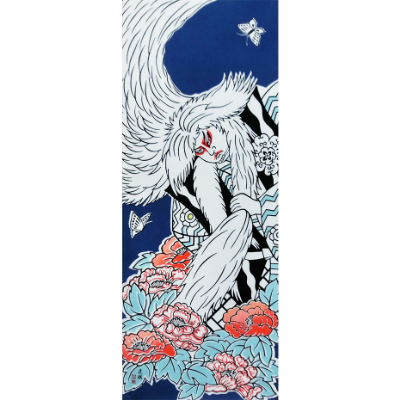
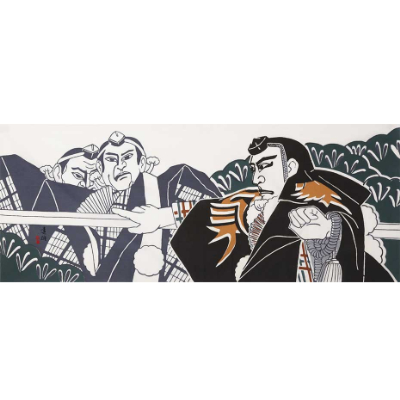
Tenugui : Shibaraku
This tenugui features original artwork of Shibaraku by Tateo Ōkido, author of the Kabuki Miscellany series.
」-400x400.jpg "手ぬぐい「暫(歌舞伎十八番)」")
Tenugui : Kabuki Eighteen Best Plays “Shibaraku”
This tenugui illustrates Shibaraku, one of the Kabuki Jūhachiban plays introduced in the Kabuki Miscellany series.
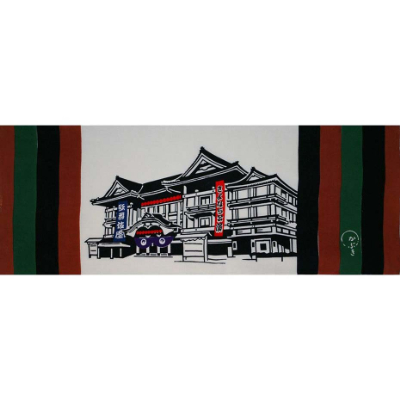
Tenugui : Kabukiza Farewell Performances
This tenugui features a design inspired by the kakiiro-colored jōshikimaku curtain, as introduced in the Kabuki Miscellany series.
」-400x400.jpg "手ぬぐい「隈取市松(柿色)」")
Tenugui : Kumadori Ichimatsu Pattern
This kabuki-themed tenugui is dyed in kakiiro (persimmon color), as featured in the Kabuki Miscellany series.
」.jpg "手ぬぐい「暫(大城戸)」")