
【KABUKI Miscellany】 Episode 13 : Yoshitsune Senbonzakura / Narrated by Tateo Okido
Hello! We are Asanoha, a tenugui specialty shop located in AzabuJuban, Tokyo.
We’re delighted to share a collection of intriguing stories related to Kabuki. These tales are narrated by Mr. Tateo Okido, an expert in Kabuki and the artist behind the original designs of our Kabuki-themed tenugui. Please enjoy this special series, Kabuki Miscellany, presented by Mr. Okido.
Kabuki Miscellany – Episode 13 :
Yoshitsune Senbonzakura – Kawatsura‑Hōgen‑Yakata
One of the most frequently performed plays today is Yoshitsune Senbonzakura. Regarded as one of kabuki’s three great masterpieces (alongside Kanadehon Chūshingura and Sugawara Denju Tenarai Kagami), it began as a puppet‑theatre script before being adapted into kabuki — a prime example of maruhon kabuki.
The play is structured in five acts, each offering its own dramatic highlights — from the grand opening in Ōuchi to the climactic final act at Zao‑dō. In recent productions the most commonly staged scenes are: Tokaiya / Ōmono‑ura, Sushi‑ya, Yoshino‑yama, and Kawatsura‑Yakata (commonly called Shinokiri, the fourth act), which is widely regarded as the most compelling. Occasionally, acts like the farewell of Yoshitsune and Shizuka, or the Tadanobu scenes set before a shrine gate, are revived. The first act (Ōuchi) is seldom performed.
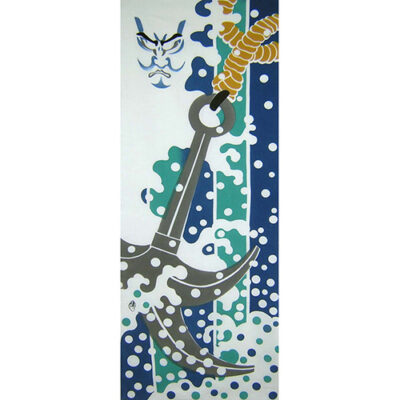
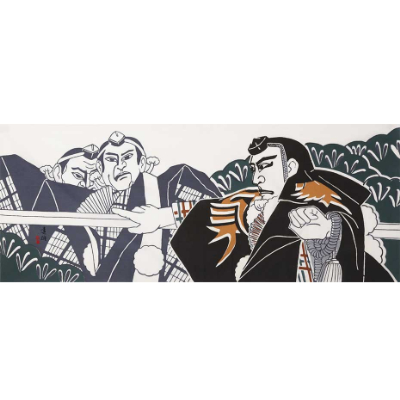
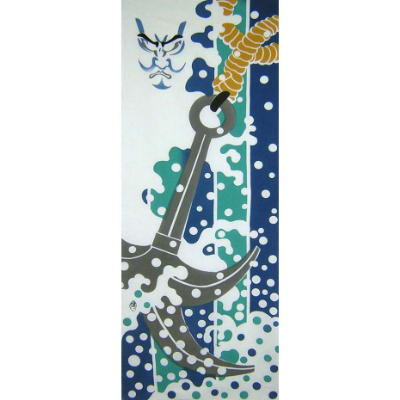
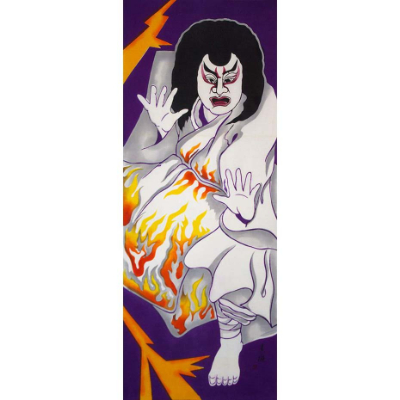
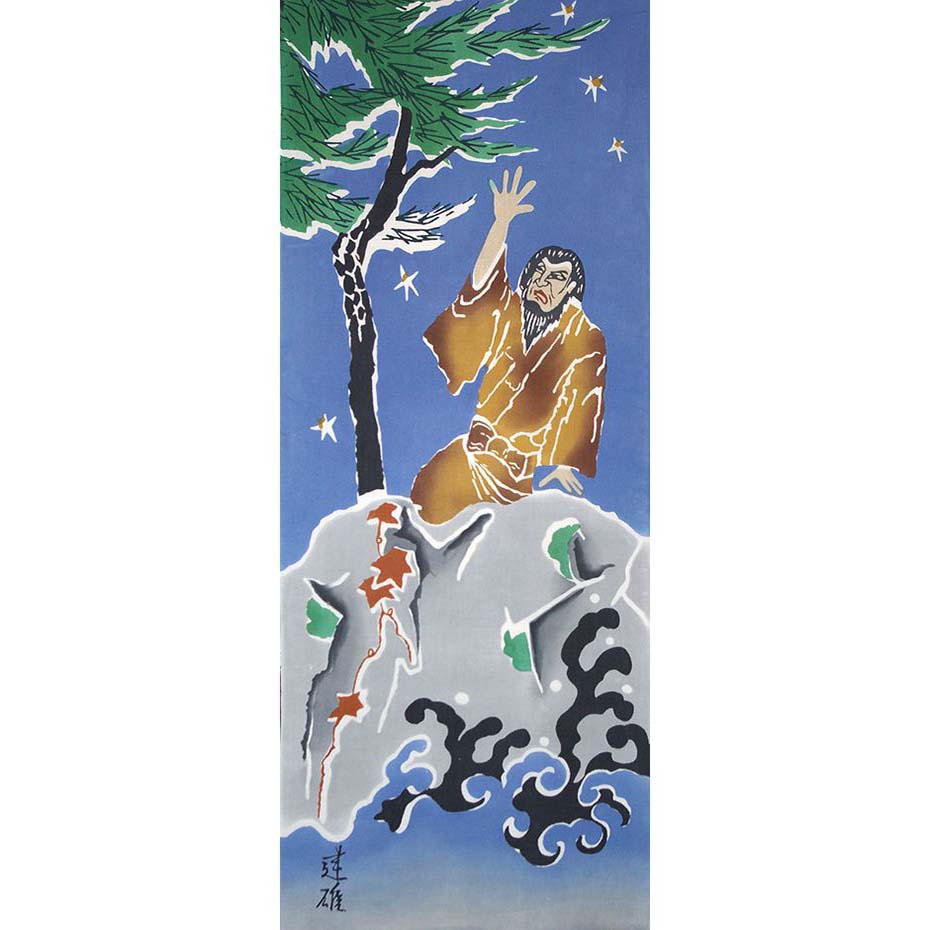
Tenugui Design “Ikari Tomomori” – Original Artwork by Tateo Okido
At Kawatsura‑Yakata, it becomes clear that there are two “Tadanobu” — which one is the real Tadanobu? In fact, the true Tadanobu has returned to his hometown under the pretext of caring for his sick mother. Yoshitsune honors the Tadanobu who protected Shizuka from her enemies by bestowing on him the name Genkurō Yoshitsune. But that Tadanobu is actually a fox in disguise.
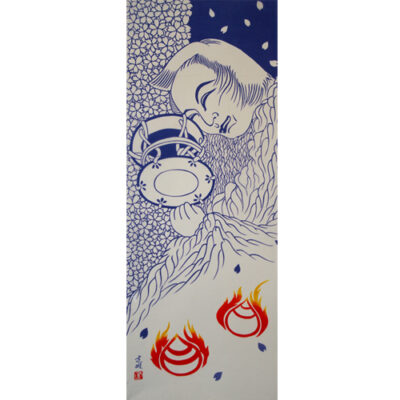
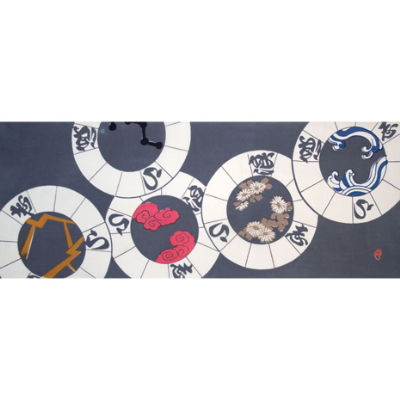
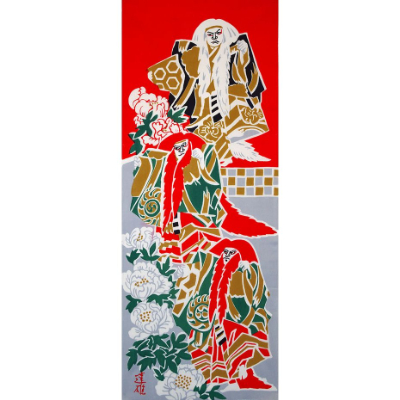
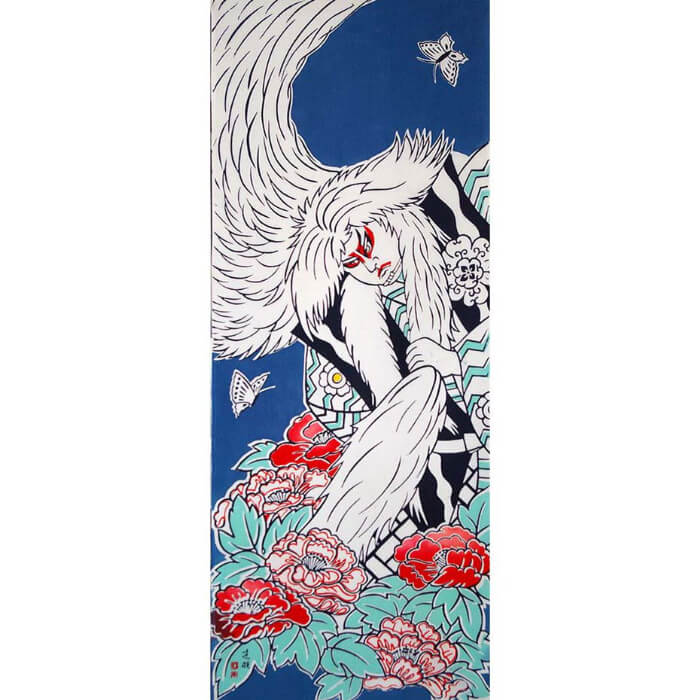
Tenugui Design “Kitsune Tadanobu” – Original Artwork by Tateo Okido
In kabuki, the play proceeds under the assumption that the audience already knows this story. For example, in the Fushimi‑Inari scene, when the Tadanobu who rescued Shizuka slips away down the hanamichi, the invocation of “Kitsune Roppō” signals to the audience that this is a fox spirit — a subtle cue rooted in shared understanding. This implicit agreement is part of kabuki’s charm: the known becomes a performance, the unknown remains a mystery.
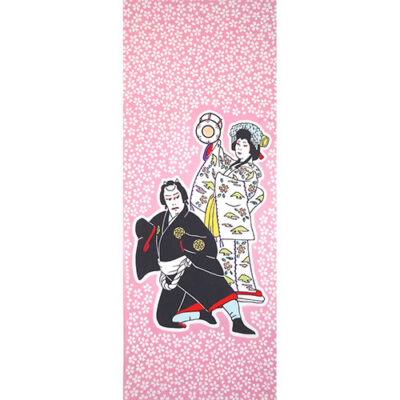
Tenugui “Yoshitsune Senbon Zakura”
Thus, the audience — already aware of the tale — watches with great interest to see how the actors will portray the transformation, when the true nature is revealed, and exactly how the fox’s identity will manifest. If the interpretation exceeds expectations, they erupt in applause; if not, critical murmurs follow. This interplay — between expectation, interpretation, and reaction — is central to the kabuki experience.
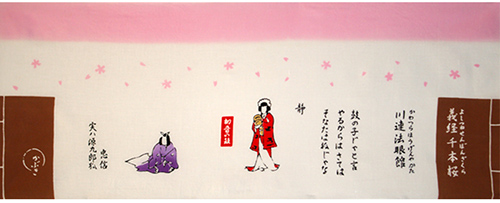
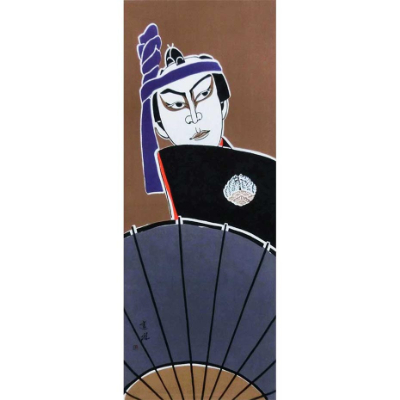
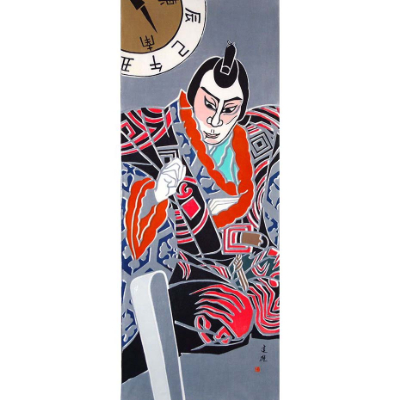
Tenugui “Yoshitsune Senbon Zakura”
In Kawatsura‑Yakata, the real Tadanobu is summoned before Yoshitsune. Yoshitsune calls him by the name he bestowed — Genkurō Yoshitsune — but receives no response. Suspicion grows. Then Shizuka and the deceptive Tadanobu arrive. Yoshitsune attempts to console Shizuka, but the true Tadanobu is missing. Shizuka strikes the drum Hatsune‑no‑tsuzumi, and the acting Tadanobu appears. The audience, already aware that this is a fox, instantly understands — “So you are a fox, are you?” With that realization, the play morphs into a tragic tale of a parent fox and child fox, a story of complex emotional and familial love. The actors’ ability to evoke that emotion, and to convey the fox’s transformed identity through speech and gesture, becomes the focal point.
From then on, the stage is filled with typical kabuki extravagance — dramatic cues, heightened emotion, vivid symbolism — transporting the audience into another world. Though in hindsight the plot may seem simple or even predictable, the emotional and psychological intricate layering makes it captivating. This, to me, encapsulates the very essence of kabuki.
」.jpg "手ぬぐい「暫(大城戸)」")