
The Plum Blossom, Herald of Early Spring — At the Beginning of a New Year
The Plum Blossom, Herald of Early Spring
As the New Year begins and the air still carries the chill of winter, a small flower quietly catches the eye—the plum blossom.
It does not burst into bloom all at once like the cherry blossom, nor does it dazzle with vivid color. And yet, in Japan, the plum has long been cherished as a special flower of early spring.
The plum is a flower that signals the end of winter. Enduring snow and frost, it blooms ahead of all others, earning the name harutsugegusa—“the flower that announces spring.” Against a landscape still wrapped in winter’s hues, a single branch beginning to bloom gently tells of a new season about to arrive.
This quality of blooming early is one of the reasons the plum has become so closely associated with the early days of the New Year.
The start of a year is not so much a moment of sudden change as it is a time to compose one’s heart and reflect on the days ahead. That quiet, reflective atmosphere seems to resonate with the plum’s dignified presence—reserved, composed, and subtly strong rather than overtly flamboyant.
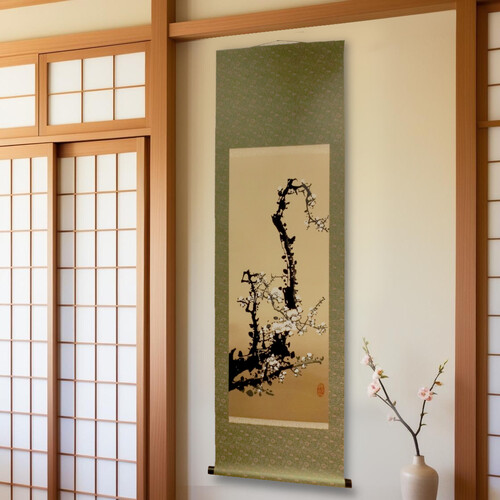
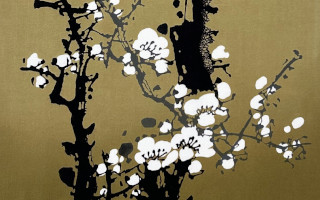
Tenugui Kakejiku “White Plum Blossoms”
A Flower Reflecting Perseverance and Hope — The Meaning of the Plum
The plum has long been regarded as a symbol of perseverance and effort.
Blooming only after enduring the harsh cold of winter, it evokes the idea that quiet, unseen dedication will eventually bear fruit. For this reason, the plum has been cherished not merely as a seasonal flower, but as a vessel onto which people have placed their hopes for the year yet to begin.
In the worlds of calligraphy and painting, the plum is often depicted within generous expanses of empty space.
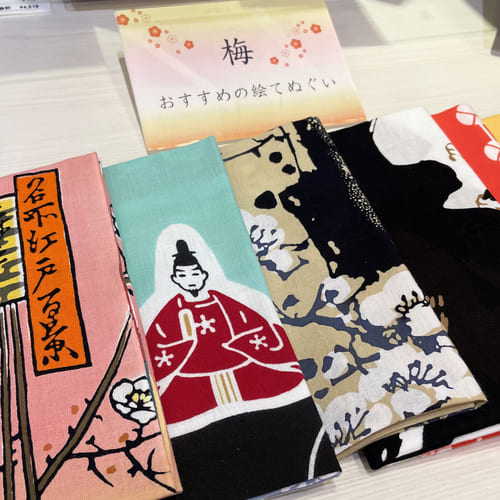
A composition in which white plum blossoms are set against a pale, understated background conveys a sense of stillness and refinement, mirroring the taut, expectant air of early spring. By contrast, in ukiyo-e prints portraying famous places of Edo, plum blossoms appear as lively elements within scenes of everyday life—part of landscapes where people eagerly awaited the coming of spring.
Thus, the meanings carried by the plum have been expressed in many forms across painting and craft.
Though it is the same flower, its expressions encompass both stillness and movement. Perhaps it is this remarkable breadth—its ability to embody quiet contemplation as well as vibrant anticipation—that has allowed the plum to remain so deeply beloved over time.

Art Frame & Ukiyo-e Tenugui “Plum Estate, Kameido”
Early Spring and the Wishes Carried by the Plum
Japanese aesthetics hold a deep respect for things that come first.
People greet the year by offering prayers to the first sunrise, entrusting the course of the year to the first dream, and wishing for safety and well-being at the first shrine visit. Customs such as the first calligraphy of the year, the first bath, or the first cup of tea are all acts that mark the very first step of a new beginning.
These practices are not about rushing toward results.
Rather, they reflect the importance of taking a step forward even when things are not yet fully in place. This sensibility has long shaped the Japanese way of welcoming the New Year—and the plum blossom embodies this value in the natural world.
The plum does not bloom all at once like the cherry blossom.
Yet blooming surely amid the lingering cold, it conveys perseverance, sincerity, and quiet hope. Perhaps this is why, at the start of a new year, people are drawn to the plum—not in pursuit of flamboyant success, but in hope of steady, meaningful progress.
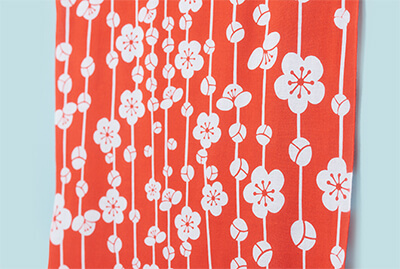
Tenugui “Kabuki Costume – Michitose (Plum)”
The Plum as a Symbol of Learning and Growth
The plum has also come to embody meanings associated with learning and personal growth.
When people think of Sugawara no Michizane—the deity of scholarship—many naturally recall the image of the plum blossom. Opening a path through steady effort, building something patiently and with sincerity: these values have long been reflected in the plum, allowing it to blend seamlessly into prayers offered at the beginning of a new year.
The association between the deity of learning and the plum may well stem from a shared reverence for the power of accumulation—the belief that what is patiently and earnestly built over time will eventually bear fruit. Displaying plum blossoms at the New Year, then, is not merely an act of seeking good fortune, but perhaps a quiet vow to consider how one wishes to live in the year ahead.
The plum also plays an essential role in celebratory settings through its place in the auspicious trio known as shōchikubai—pine, bamboo, and plum. The pine represents splendor, the bamboo resilience and flexibility, and the plum perseverance and hope. Among them, the plum stands as a symbol of transition from winter to spring, carrying a meaning especially fitting for the threshold of a new year.
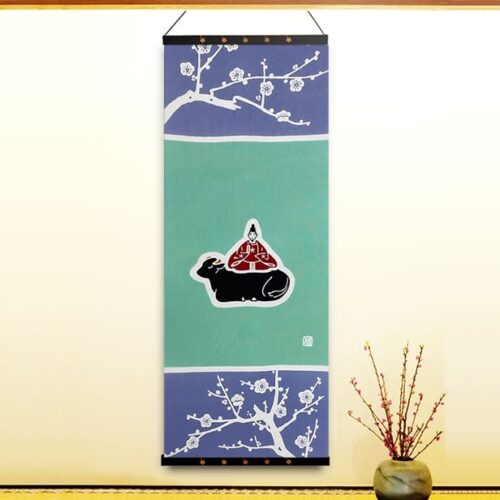
Art Frame & Tenugui “Tenjin on the Ox”
The Presence of Early Spring in Tenugui
Plum motifs depicted on tenugui follow naturally from this same lineage of meaning.
Within a single piece of cloth, one may find the dignified presence of white plum blossoms, a fleeting glimpse of spring in Edo, or symbolic expressions of celebration and quiet prayer. While their meanings gently shift depending on how they are used or where they are displayed, these motifs consistently remain close to the sentiment of welcoming a new year.
Dignified yet restrained, modest yet imbued with quiet strength—the plum blossom speaks without words. Perhaps it is through this gentle presence that the plum conveys the spirit of early spring, greeting us softly at the threshold of a new year.